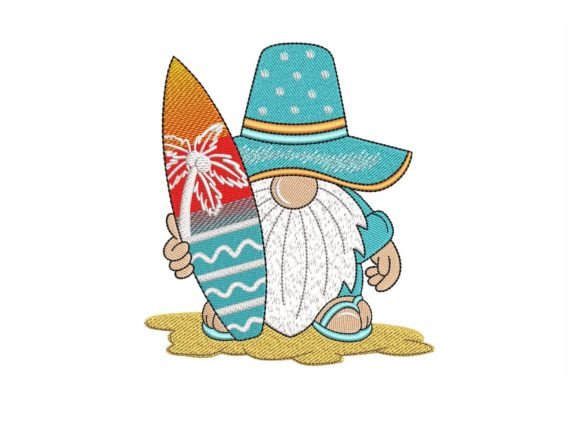
Summer Surfer Gnome Review
As a designer who spends half my day staring at digitized files and the other half troubleshooting tension issues on the embroidery machine, I have learned to be skeptical of "cute" designs that don't translate well into physical stitches. We have all been there: you download a file because the preview looks adorable, you load it up, and the result is a muddy, distorted mess that no amount of pressing can fix. That is why I take every new machine embroidery design with a critical eye before adding it to my production queue or my personal stash.
This week, I put Summer Surfer Gnome through its paces. The concept is straightforward—a festive gnome character decked out in summer attire, complete with a surfboard. It sounds simple enough, but simplicity in digitizing is often where things go wrong. Does it hold up as a viable option for custom apparel, boutique merchandise, or personalized gifts? Let’s break down what this design actually delivers when the needle starts moving.
First Impressions and Visual Personality
The immediate appeal of Summer Surfer Gnome lies in its thematic clarity. In the crowded world of embroidery project assets, especially those falling under the broader Summer category, it is easy for designs to get lost in the noise. This one stands out because it balances the traditional gnome silhouette with a distinct seasonal narrative. The inclusion of the surfboard isn't just an accessory; it dictates the layout and flow of the design, giving it a dynamic, sideways energy that feels active rather than static.
From a visual standpoint, the mood is undeniably cheerful. It evokes beach days, warm weather, and relaxed vibes. For a small business owner or an Etsy seller, this translates directly to product potential. It is not just a decorative element; it is a statement piece that tells a story. When I look at the digital preview, I see a design that has strong character. The gnome’s outfit provides clear areas for color blocking, which is crucial for maintaining definition in thread colors. If the digitizer had made the shirt and shorts too similar in tone, the character would have flattened out. Fortunately, the contrast seems intentional, suggesting that the final finished product will pop against most fabric backgrounds.
Real-World Application: Where It Fits Best
I do not believe in designs that only look good on a screen. To evaluate Summer Surfer Gnome properly, I had to imagine it on actual products. My first scenario was a custom tote bag design for a summer market stall. Tote bags are a staple for crafters, but they present unique challenges due to the weave of canvas or cotton. A design that is too dense might stiffen the bag handle area, while one that is too sparse might look faint. The balance here appears solid. The surfboard graphic offers a large enough focal point to anchor the bag without overwhelming the entire surface area.
Another strong use case is sweatshirt embroidery or heavyweight t-shirts. As the weather shifts, summer-themed items remain relevant for vacation wear or "resort" style collections. Placing Summer Surfer Gnome on the chest of a heather grey tee or centered on a sweatshirt creates an instant hit for casual, everyday wear. The design’s playful nature makes it highly giftable, positioning it perfectly for personalized gift markets, such as baby showers (for future beach lovers) or teacher appreciation gifts during end-of-year sales.
I also considered its viability as an embroidered patch. Patches require durability and clear edges. The outline of the gnome and board likely utilizes a tight satin stitch or applique technique to define the shape. If executed correctly, this design could easily be ironed or sewn onto denim jackets, caps, or backpacks, extending its life beyond a single garment. This versatility is exactly what digital product sellers and craft business owners look for—assets that offer multiple revenue streams from a single purchase.
Performance on Different Fabrics and Hoops
Not all fabrics treat embroidery files equally. While Summer Surfer Gnome looks great in theory, its performance depends heavily on the substrate. I recommend testing this design on stable, medium-weight fabrics like cotton twill or canvas for the best results. These materials provide the necessary structure to support the stitch density without puckering.
However, caution is advised with certain materials. Stretchy knits, unless stabilized very carefully, may distort the circular elements of the gnome’s hat or the curves of the surfboard. Thin, sheer fabrics are also risky; the backing stabilizer might show through, or the stitches might pull the fabric excessively. Similarly, textured fabrics like boucle or heavy waffle weaves can obscure the finer details of the design. In these cases, the small details—perhaps the facial features or the fins on the surfboard—might get lost in the texture of the cloth.
Hoop size is another practical consideration. While the exact dimensions should always be verified in your specific software, designs with horizontal elements like surfboards benefit from wider hoops to allow for proper placement on garments like hats or wide tote panels. If you are working with a smaller hoop, you may need to resize the design, which can compromise the integrity of the proportions. Always check the recommended hoop size before committing to a production run.
Technical Execution and Stitch Quality
When reviewing any embroidery file, I pay close attention to how different stitch types are utilized. A successful design typically combines satin stitch for outlines and borders, fill stitch for larger color areas, and running stitch for fine details or texturing. In Summer Surfer Gnome, the transition between the gnome’s beard (likely white or light grey) and his skin tone needs to be clean. Poorly executed transitions can lead to visible gaps or overlapping errors.
Furthermore, the use of applique design techniques could enhance this piece significantly. If the original file includes applique layers for the shirt or shorts, it adds dimension and reduces thread count, resulting in a softer hand feel. Even if it is purely stitched, the density should be balanced so that the fabric remains flexible. A design that is too dense turns the garment into cardboard, which customers rarely appreciate in wearable items.
Practical Tips for Designers and Sellers
If you are planning to use Summer Surfer Gnome in your commercial embroidery projects or handmade shops, keep these practical notes in mind:
- Test on Scrap Fabric: Never go straight to the final product. Run the design on a scrap of the same fabric type to check for tension issues, color bleeding, or distortion.
- Check Thread Contrast: Ensure your chosen thread colors provide enough contrast against the fabric. On dark fabrics, lighter threads may need an underlay or a higher thread count to appear vibrant.
- Review Small Details: Zoom in on the digitized file. Are the eyes too small? Will the surfboard fins stitch out clearly? Small details are the first to fail in real-world stitching.
- Use Proper Stabilizer: The right stabilizer is non-negotiable. Cut-away stabilizers are generally safer for stretchy or heavy items, while tear-away may suffice for woven tote bags.
- Verify Licensing: Before listing this as a small shop product or selling finished goods, confirm the commercial usage rights. Some files are for personal use only, while others allow limited or unlimited commercial sales.
- Mockup Wisely: Create printable mockups or digital previews to show customers how the design looks on different colored garments. This helps manage expectations regarding color accuracy.
Final Verdict
Summer Surfer Gnome is a charming, versatile addition to any design assets library. It captures a specific seasonal mood effectively and offers strong potential for various handmade product categories. From baby embroidery items to holiday embroidery (as a summer holiday alternative), it has broad appeal. Its success ultimately depends on execution—choosing the right fabric, stabilizer, and thread colors—but the underlying design foundation is solid.
For creative entrepreneurs looking to add a touch of whimsy and seasonality to their inventory, this design is worth the investment. Just remember to test thoroughly, respect the technical limitations of your machine and materials, and always prioritize quality control. When done right, a simple gnome on a surfboard can become a bestseller that brings smiles to customers and value to your brand.