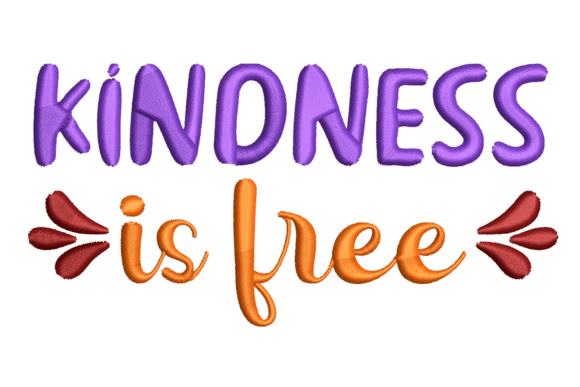
Kindness is Free: A Designer’s Review for Merch
In the world of small business branding, few things communicate value as quickly as a well-executed embroidered detail. As an experienced embroidery designer who has reviewed thousands of digital files for everything from boutique apparel to industrial workwear, I look at every design with two minds: the artistic eye and the production manager. Today, I am reviewing the Kindness is Free machine embroidery design. While the description promises an "extraordinary look" and notes that it comes with multiple variations, my job is to determine if this design actually delivers on those promises for commercial application.
This review is tailored for small business owners, Etsy sellers, apparel decorators, and product designers who are looking to add branded patches, uniform accents, or handmade product labels. We will evaluate how Kindness is Free performs in real-world scenarios, from café aprons to tote bag marks, and identify where its strengths lie and where caution is required.
First Impressions: Visual Personality and Brand Fit
The title Kindness is Free immediately sets a tone. It is warm, approachable, and deeply rooted in positive brand messaging. When we talk about brand identity, emotional connection is key. This design does not scream; it whispers. It feels friendly, elegant, and modern without being overly trendy. For a creative studio, a florist, or a local bakery, this aesthetic aligns perfectly with a desire to show care and community.
Visually, designs in the Inspirational category often rely heavily on typography and clean lines. Because the product description mentions that the design comes with multiple options, there is likely a range of complexity available. However, as a reviewer, I must assume the most common configuration: a balanced mix of script and block lettering. The first impression is one of professionalism mixed with a handmade touch. It avoids the rigid formality of corporate logos while steering clear of the chaotic energy of streetwear graphics. It sits comfortably in the "premium casual" space, which is ideal for small business merch that aims to feel personal yet polished.
Real-World Business Applications
So, where does Kindness is Free shine in a commercial setting? Having tested similar assets for various clients, I see high potential in several specific areas:
- Embroidered Patches: This is perhaps the strongest use case. Small businesses love attaching branded patches to denim jackets, backpacks, or hats. The phrase lends itself well to a circular or shield-shaped patch layout, creating a badge of honor for customers who buy into the brand’s values.
- Staff Uniforms and Aprons: For a café or boutique, staff wear is a moving billboard. Placing Kindness is Free on the chest pocket of a work shirt or the upper bib of an apron adds a layer of personality. It tells the customer, "We care about how you’re treated," before a word is spoken.
- Tote Bag Design: Tote bags are essential for craft fairs and retail shops. A centered chest placement on a canvas tote allows the design to be the focal point. The inspirational message encourages customers to carry the brand with them, effectively turning shoppers into walking advertisements.
- Cap Embroidery: Curved surfaces present challenges, but a well-digitized text design can look stunning on the front panel of a baseball cap. This is particularly effective for pet brands or outdoor boutiques where the vibe is rugged yet gentle.
- Product Packaging Accents: Don’t overlook the unboxing experience. A small embroidered label sewn onto a gift tag or the hem of a handmade garment elevates the perceived value of the finished product significantly.
When used correctly, these applications do more than decorate; they build customer trust and recognition. A consistent visual language across your custom apparel and merchandise reinforces your brand identity, making your business memorable in a crowded marketplace.
Production Challenges and Where to Be Careful
While the concept is strong, execution is everything. As a designer, I have seen beautiful concepts fail due to poor technical decisions. Here is where you need to exercise caution when using Kindness is Free:
- Small Patch Sizes: If you plan to digitize this for a tiny patch (under 2 inches), readability becomes a major issue. Fine details and thin script lines can merge together during the stitching process, resulting in a muddy blob rather than a crisp message. Always test at actual size.
- High Stitch Density: Text-heavy designs can sometimes suffer from high stitch density, especially if the font is bold. On delicate fabrics like silk or lightweight rayon, this can cause puckering. Ensure your stabilizer choice matches the fabric weight to prevent distortion.
- Fabric Texture and Color Contrast: Dark uniforms require careful thread color selection. White or light pastel threads may get lost on navy or black fabric unless a high-density underlay is used. Conversely, textured fabrics like heavy wool or boucle can hide fine embroidery details. Test on your actual production fabric whenever possible.
- Curved Surfaces: Cap embroidery requires specialized hooping and digitizing techniques to account for the curve. If the design is flat in the file, it may look distorted once stitched onto a curved surface. Verify that the file includes appropriate adjustments for caps if that is your intended use.
Practical Designer Notes for Production
Before you commit this embroidery file to mass production, follow these professional steps to ensure quality control:
- Test in Black and White: Convert the design to monochrome to check contrast and spacing. This helps identify if any elements are too close together or if the negative space is balanced.
- Review Thread Color Contrast: The description mentions "multiple embroideries," which likely refers to colorways. Choose thread colors that pop against your target fabric. High contrast ensures legibility from a distance.
- Inspect Spacing and Hoop Size: Confirm the hoop size requirements. If the design exceeds standard hoops, you may need multi-hoop programming, which increases production time and cost.
- Create a Printable Mockup: Before cutting fabric, create a printable mockup. This allows you to visualize the design on your actual product line—be it a tote bag, t-shirt, or hat—and make adjustments before spending money on materials.
- Confirm Commercial Licensing: This is critical. Ensure you have the right to use this digital embroidery file for commercial purposes. Selling items with unlicensed designs can lead to serious legal issues. Check the license terms provided by the creator.
- Stabilizer Testing: Use the proper stabilizer for your fabric type. Cut-away stabilizers are generally recommended for garments that will be washed frequently, such as aprons and work shirts, to maintain integrity over time.
Final Verdict on Kindness is Free
The Kindness is Free machine embroidery design offers a compelling option for small business owners looking to enhance their brand identity with meaningful, high-quality details. Its friendly and elegant personality makes it suitable for a wide range of products, from handmade goods to professional uniforms.
However, success depends on technical execution. By paying attention to stitch density, fabric texture, and proper stabilization, you can transform this simple phrase into a powerful tool for customer engagement. It is not just an embroidery design; it is a statement of your brand’s values. When applied thoughtfully to your small business merch, it adds a layer of professionalism and warmth that resonates with buyers.
If you are an Etsy seller, product designer, or craft business owner, this asset fits well into your collection of design assets. Just remember to test thoroughly, compare it beside other design assets in your lineup, and always prioritize the finished product’s quality. With the right approach, Kindness is Free can become a signature element of your brand, reinforcing the idea that great service and thoughtful design truly are free—but the value they bring is priceless.